
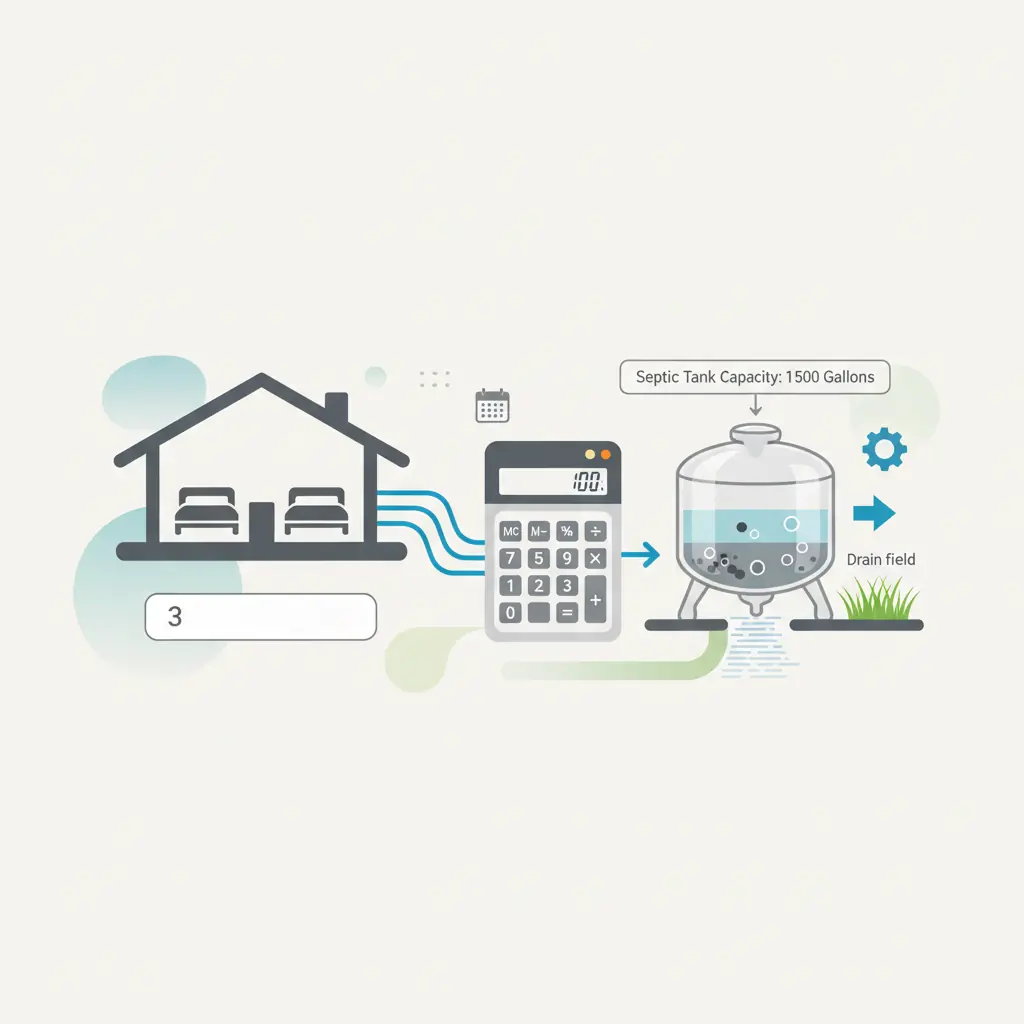
A septic tank size calculator by bedroom count is a cooperative pecker put-upon to reckon the valid. septic tank capacity needed for a residential area. Many homeowners and builders trust this strategy since the number of bedrooms usually reflects the number of people living in a family, and the addition of. Household wastewater is generated every day as part of the preparation . Residential septic system. It is key to pinpoint the right tank size so the setup can handle daily sewerage flow without overloading.
Advanced Septic Calculator
Estimate tank size and daily flow based on household usage.
To use a septic tank size calculator, simply enter the number of bedrooms in your home. The tool then estimates your daily wastewater flow based on standard occupancy. Most regulations assume each bedroom is for two people. This means a three-bedroom house is considered to have six residents, which directly affects the required septic tank size in gallons. Once the calculator estimates water use, it provides a recommended tank size that safely stores and treats the wastewater.
Victimisation . The septic tank capacity calculator helps avoid big problems that can occur when septic systems are incorrectly sized. An undersized septic tank can overflow or allow solid waste to enter the drain field, leading to expensive repairs and environmental hazards. Installing an excessively large tank car can unnecessarily boost construction costs. By calculating the appropriate. septic system size Homeowners can make informed decisions before installing or upgrading their septic system.
Another plus of exploitation . septic tank size calculator by bedroom count. Is that it aligns with many? local building codes and septic system regulations. These rules are designed to guard public health and avert contamination of soil and groundwater. By victimising a reliable calculator and adhering to recommended sizing guidelines, homeowners can ensure their septic system will serve efficiently for many years.
What Is a Septic Tank and Why Is It Important
A septic tank is an underground container used in onsite wastewater treatment systems for homes that aren’t connected to a municipal sewer network. It serves as the main treatment component of . residential septic system Collecting effluent from toilets, sinks, showers, washing machines, and other household plumbing fixtures. The primary purpose of the infectious storage tank is to separate solid waste from liquid wastewater, enabling natural biological processes to break down low levels of organic matter.
In a typical arrangement, effluent flows from the theater through finished underground pipes into the septic tank car. Inside the armored combat vehicle, the effluent remains for a set period, allowing heavier particles to settle to the bottom and lighter substances, such as grease and oil, to drift to the top. This separation workflow is core because it prevents solid materials from entering . septic drain field, which could otherwise get clogged.
The contaminated tankful works together with . leach field Too renowned as . drain field to thoroughly treat the sewer water treatment approach. Once the partially treated liquid leaves the pussy tank, it travels into the drain field, where the soil acts as a natural filter. The soil removes bacteria, viruses, and other contaminants before the water reaches the groundwater system, which gradually returns to the groundwater system.
Having the right way-sized. Septic tank capacity is vital, as the storage tank must hold sewage long enough for solids to settle and for bacteria to begin breaking down organic waste. Assuming the tankful is outrageously small, the effluent may leave the armored combat vehicle before treatment, leading to setup failure. That’s why, determining the precise. Septic tank size by bedrooms is a weighty factor in pussy system design.
How a Septic System Works
Understanding how septic systems work helps homeowners appreciate how important proper sizing and care are — a fact that is typical. The on-site wastewater treatment system follows a simple yet practical approach that relies on gravity, bacteria, and natural soil filtration to treat household wastewater.
The process begins when. Household wastewater flows from the abode into the dirty armored combat vehicle through underground pipes. This sewer water includes wastewater from toilets, showers and bathtubs, kitchen effluent, and water discharged by washing machines and dishwashers. Once internal, the tankful, the sewer water begins to separate into layers.
The bottom layer consists of heavy solids renowned as. septic sludge that settles to the bottom of the cooler. The top layer contains lighter materials like grease and oils, forming what’s called . scum layer. Between these layers is a middle section containing partially treated liquid sewage water. This liquid is called. Effluent is the portion that eventually flows out of the cooler.
Natural anaerobic bacteria in the tank break down low levels of organic matter in the sludge and scum layers. Although these bacteria help reduce waste volume, solid material still accumulates over time. The purpose of septic systems is to pump the tanks periodically to remove excess sludge and maintain proper operation.
After partial treatment within the tank, the effluent flows into. septic drain field Here, the wastewater slowly seeps through layers of soil. Soil microorganisms remove harmful pathogens and nutrients, completing the wastewater treatment process. When it enters the setup, this natural filtration ensures that the water returning to the conditions is significantly cleaner than it was.
Why Bedroom Count Determines Septic Tank Size
The number of bedrooms in a home is widely used to estimate things like septic tank capacity. While it may seem unusual at first, counting bedrooms is a reliable way to predict how much wastewater a household will produce. Engineers and regulators use this method because it closely matches household occupancy.
Most septic system design standards assume that each bedchamber serves approximately 2 occupants. As an example, a family with three bedrooms is generally intended for about six people. These individuals will use water for everyday activities like bathing, cooking, cleaning, and washing clothes. As a result, the number of bedrooms becomes a practical indicator of potential. daily wastewater production .
Water customs vary depending on modus vivendi and family habits; by contrast, the average person produces between. 60 and 100 gallons of wastewater per day. When the estimated number of residents is multiplied by this number, the total sewer water flow can quickly reach several hundred gallons per day. So, a larger menage requires a larger. septic tank capacity To safely store and treat this effluent.
Another cause chamber reckons is that homes with more bedrooms typically have more plumbing fixtures. Additional bathrooms, sinks, showers, and appliances increase water usage and require more sewerage. By using victimization bedroom enumeration as a guideline, contaminated mechanism designers can estimate the required tank car sizing before construction begins.
Septic Tank Size Calculator by Bedroom Count
A septic tank size calculator by bedroom count provides recommended tank capacities for homes of various sizes. These recommendations are based on common engineering guidelines misapplied in residential septic system design.
1 Bedroom Septic Tank Size
A small abode with one bedroom generally requires. 750-gallon septic tank. This mental ability is more than enough for cabins, tiny homes, or guest houses, wherever water use is relatively low. In small homes, the septic tank must be large enough to allow sewage to remain long enough for solids to settle and for bacteria to decompose waste.
2 Bedroom Septic Tank Size
For a two-bedroom home, the recommended. The septic tank capacity is typically around. 1000 gallons. This sizing allows for a moderate effluent flow from a puny home. It provides sufficient storage to prevent solids from entering the drain field and ensures efficient effluent treatment.
3 Bedroom Septic Tank Size
A 3-bedroom septic tank usually holds 1000 to 1250 gallons. This size is among the most common for residential properties, as many homes have three bedrooms. The larger capacity ensures it can handle the daily wastewater from multiple people.
4 Bedroom Septic Tank Size
Homes with four bedrooms typically require . 1250 to 1500-gallon septic tank. Larger households generate greater wastewater volumes from activities such as showering, cooking, and laundry. A larger tank car helps ward off mechanism overload and improves the boiler’s performance of the infectious framework.
5 Bedroom Septic Tank Size
A five-bedroom house usually needs a septic tank with a capacity of 1,500 to 1,750 gallons. This larger tank handles higher daily wastewater and manages waste from larger families.
6 Bedroom Septic Tank Size
For homes with six or more bedrooms, the recommended capability is often. 2000 gallons or larger. Conspicuous homes frequently have multiple bathrooms and higher water consumption, which increases the quantity of effluent entering the system.
Standard Septic Tank Size Chart
A septic tank size chart provides a quick overview of recommended septic tank sizes based on the number of bedrooms. This chart is commonly used by builders, plumbers, and homeowners during the provision stage of installing an infectious network.
Generally, septic tanks range from. 750 gallons to over 2000 gallons, depending on the size of the domicile. The most common residential tank car size is. 1000 gallons, which is suitable for many average households. Larger homes require greater capacity to control higher effluent flows and ensure adequate treatment, metered within the armored combat vehicle.
Many engineers similarly follow . The gallons-per-bedroom rule, which suggests adding more or less. 150 to 250 gallons of septic tank capacity for each bedroom. This rule of thumb provides tractability when designing pussy systems and accommodates variations in family water usage.
Yet, local. Building codes and environmental regulations may require exact minimum sizes for armored combat vehicles. Homeowners should incessantly double-check the requirements in their area before installing a pussy system.
Factors That Affect Septic Tank Size
In the bedroom, the main size ingredient is considered; various other elements influence the necessary. septic tank capacity. These factors can increase or decrease the quantity of sewer water entering the system, which you must consider during pussy structure design of the sewage system.
One vital factor is. Daily water usage. Homes with high water consumption from long showers, large bathtubs, or frequent appliance use generate more effluent than average households. In such cases, a larger putrid tank may be recommended to ward off mechanism overload.
Another part is the use of. Kitchen garbage disposals. These devices grind food waste and send it into the septic system, increasing the amount of solids entering the tank. So, homes with garbage disposals often involve larger septic tanks or more steady pumping.
The number of bathrooms also plays a role. Homes with multiple bathrooms have more toilets, sinks, and showers, all of which contribute to higher sewer water production. Similarly, the volume of laundry loads from washing machines can significantly increase the amount of water entering the infectious system.
. The soil percolation rate in the drain field affects the structure’s design. Soil that drains slowly may require a larger armored combat vehicle and a larger drain field to prevent effluent from pooling on the surface.
How to Calculate Septic Tank Size
So long as you aim to figure out dirty storage tank size manually, you can follow a standard computation method secondhand by engineers. The maiden stride is estimating . Daily wastewater flow is supported by the number of occupants in the home.
Suppose that you produce around. 75 gallons of wastewater per day. If a theater has three bedrooms, the estimated population is six. Multiplying six live by 75 gallons results in roughly. 450 gallons of wastewater per day .
The next step is determining the system for how long the wastewater should remain within the dirty tank. Most systems are designed to hold at least. Two to three days of wastewater flow are required for solids to settle properly. In this model, multiplying 450 gallons by two results in a minimum capacity of around. 900 gallons, which means . A 1000-gallon septic tank would typically be recommended.
This simplified reckoning system explains what prompted. Septic tank sizing by bedroom count is a practical approach for homeowners and builders.
Common Septic Tank Sizing Mistakes
Many homeowners make mistakes when choosing the size of their dirty army tank. One of the most widespread errors is installment . undersized septic tank. The minute that the cooler is too small, sewer water moves through the setup disproportionately quickly, preventing solids from settling properly. This can cause sludge to clog the drain field and the soil.
Another mistake is ignoring future domicile expansion. Provided that homeowners plan to add additional bedrooms or bathrooms later, the dirty arrangement should be intentional with extra capacity to handle increased effluent flow. Otherwise, the arrangement may need to be replaced or upgraded.
Some homeowners also believe that larger tanks are unfailingly prone to breaking. While larger tanks can handle more sewer water, installing a cooler that’s significantly oversized may increase construction costs without providing additional benefits. The best approach is to choose a tank car sized to match the estimated sewer water production of the house.
Benefits of Using a Septic Tank Size Calculator
Victimisation . The septic tank size calculator provides several advantages by providing a purulent mechanism installation. It allows homeowners to quickly appraise the correct. septic tank capacity, founded on bedchamber count and sewer water flow assumptions. This reduces the risk of selecting the wrong tank size.
Another gain is compliance with. local septic system regulations. Many regulatory authorities require septic systems to meet specific electrical capacity standards, and a figure can help ensure compliance before construction begins.
An in good order-sized infectious structure also leads to long-term. Cost savings. Systems that are correctly sized are less likely to experience backups, drain field failure, or other expensive problems. They also require less regular maintenance and typically last longer than poorly planned systems.
By the victimization of a reliable. septic tank size calculator by bedroom count. Homeowners can design an invulnerable, efficient, and environmentally responsible home. wastewater management system for their property.